

The SPDR Web: Hospitality in the Presbytery of South Louisiana

Also see: January Travels
Part 2: Hospitality in the Presbytery of South Louisiana
Over a three-day visit, I received a warm welcome from the Presbytery of South Louisiana! I had quite the adventure. I met with my predecessor and now PDA colleague, Rev. Kathy Lee-Cornell, who provided a wonderful orientation to the SPDR director role, and helped explain many processes to me. Thank you Kathy, for always being so generous and helping to answer my questions! We forgot to take a photo together but will remember next time. Kathy and I met with many New Orleans mission and outreach ministry leaders during my visit. We met with Rev. Sarah Chancellor-Watson of St. Charles Presbyterian Church’s recovery program, RHINO: Rebuilding Hope in New Orleans, with Benji Brubaker from Okra Abbey, and Rebecca Lovingood, SPDR liaison and longtime disaster recovery leader in New Orleans.
Interim General Presbyter, Rev. Richard Williams drove with me out to meet leaders of the Pointe-Au-Chien native tribe. We drove through the bayous of South Louisiana and out to the coastal lands where the bayou lands where only boats can traverse the lowlands. It was a beautiful and peaceful sunny day. I met community leaders Donald and Theresa Dardar, who were wonderful hosts to us. Presbyterian Disaster Assistance has supported the rebuilding of homes for Pointe-Au-Chien tribe families that will be strong against hurricane winds and stand high on sturdy stilts above rising floodwaters. Donald counted on his hands people’s names whose homes have been rebuilt, naming 12 families. It is an aging community, so the steep flights of stairs to access each home, were striking to me, and a need for elevator lifts is anticipated.
The tribe’s main office held a proudly display of pictures of local heroes who served in the U.S. military. One veteran returned and built a historical replica of a mud and straw hut, like those Donald and Theresa remembered elders in their village used to have. Our group posed for a picture at the hut.

University researchers are active in this neighborhood, studying the rising ocean levels that submerge native lands more each year. Erosion of the bayou land is increasing as well from oil pipelines. Pointe Au Chien is a fishing town – Donald fishes nearly every day, catching shrimp, oysters, and crabs especially. A new research initiative is using large deposits of oyster shells to reinforce the bayou shorelines to prevent further erosion and to support marine life.
Donald also showed us the water tankers used to store emergency water, as this area is vulnerable to losing access to clean water systems during disasters. The Presbytery of South Louisiana’s partnership with Solar Under the Sun has also supplied solar panels for emergency power sources that can be lifelines during disasters.
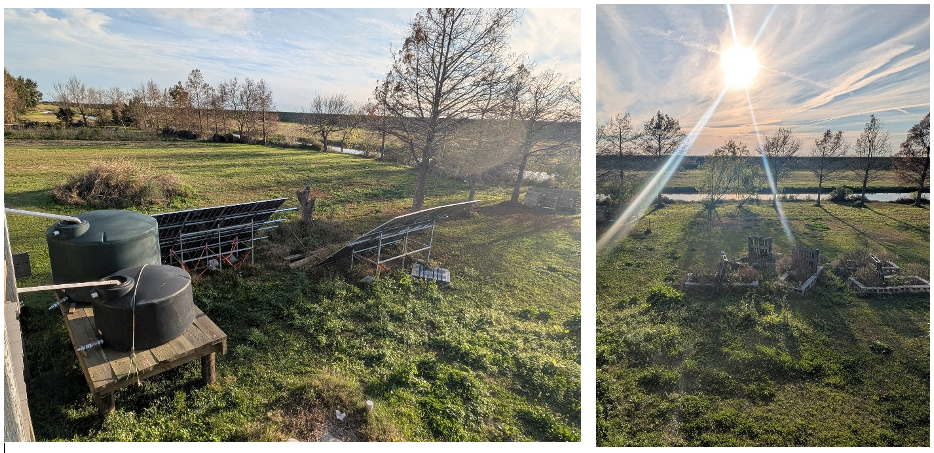

As we drove away, I remembered hearing about Pointe Au Chien at General Assembly in 2024, when commissioners were urged to keep PC(USA)’s seat at the table with major oil companies, to preserve Pointe-Au-Chien’s voice, as they advocate to preserve their lands. The tribe is requesting permission from oil companies to fill in the land around oil pipelines, to slow rapid erosion caused by the pipelines. The tribe hasn’t received a response to their request from the companies, so the Synod of the Sun prays that PC(USA) advocacy groups can help lift up the voice of Pointe-Au-Chien tribe leaders, as promised.
Loretta Credo, church ministry leader and Synod commissioner from Jefferson Parish, also graciously hosted a day of my visit, and I am thankful for her kindness.
First, Loretta showed me Jefferson Presbyterian Church’s Food Bank, opened in 2004, a wonderful ministry hosted by this small congregation of about 25 members. Their congregation shares their space with a non-denominational congregation of about 100 members. Their partner congregation helped transform the backstage area of their fellowship hall theater and a Sunday School room into large Food Pantry storage areas. The church hosts community meals as well, and provided 100 Thanksgiving meals this year. It’s amazing to see how the Holy Spirit is at work in small churches!

Loretta then drove me through beautiful Garden District of New Orleans to the historic Lafayette Cemetery No. 1, across the street from Commander’s Palace creole restaurant. Loretta explained that New Orleans during the1800s suffered a large outbreak of typhoid and yellow fever. In 1866, a local German Presbyterian congregation commissioned Kaspar Auch to build a “society tomb” for their members to be buried. The congregation closed in 1974 and their building and property was transferred to the presbytery. Records of this cemetery property were found a few years ago by chance, as the clerk reviewed old files. Left untended for fifty years, the cemetery tomb is in need of repairs, and the Presbytery of South Louisiana has formed a task force to decide how to proceed.
Loretta explained that it is a New Orleans custom to wait one year and a day to reopen a tomb, sweep the bones down a cavot in the back of the tomb, to make space for another burial. There is potential for the tomb to be renovated and reopened as a final resting place, for burials or cremated remains, and the task force is exploring many options.
She pointed to a vibrant green fern, one of the many growing out of the rock tombs. Loretta explained these are called “resurrection ferns,” which often shrivel up, but then expand and become vibrant again when it rains.


Loretta reflected that All Saints Day used to be a big festival in New Orleans, just as Mardi Gras is today. She explained the day before, there was a tradition of whitewashing all the tombs, and All Saints Day was a big family event with food and parties and vendors. When the Task Force formed to plan for the future of this cemetery site, they held a special prayer service on All Saints Day at the tomb. Loretta recalled that Rev. Ashley Brown, pastoral resident at St. Charles Presbyterian Church, prepared a beautiful liturgy honoring the remembered past and the hopeful future of this tomb.
Loretta and I then visited Okra Abbey, a community garden that offers weekly community meals. Loretta explained that okra is a prevalent vegetable in Louisiana that is a key ingredient of gumbo. “Okra just kind of holds things together,” she said. Calling this an abbey invokes a sense of sacred space, where sojourners can have a little rest, then go on their way.

That morning, New Orleans’ Young Adult Volunteers were happily working in the garden, and we all enjoyed a homecooked meal of beans and cornbread. It’s a wonderful ministry led by Benji Brubaker and a partnership ministry supported by local church volunteers.
My last stop in New Orleans was to find a good King Cake! Loretta approved my choice of Haydel’s Bakery in Jefferson Parish. The king cake made for quite an interesting carry-on and many people smiled at me as I made my way through the airport! Thank you, Presbytery of South Louisiana, for a wonderful visit!
When I returned from New Orleans, winter storm preparations were soon underway. Look forward to the next SPDR Web blog post for more information about the Synod of the Sun Partnership for Disaster Recovery's initiatives during that disaster. If you would like to report any damages, needs, or resources related to the winter storms, please contact your presbyter or Libby Janes at libby.janes@synodsun.org.


Comments